Combat System
Real-time action combat with AI-driven opponents that think on their feet.
poqpoq World features real-time action combat inspired by classic MMO mechanics with a modern twist. You select a target, activate abilities from your action bar, and manage your resources as you fight.
What sets combat apart here is the opposition. NPCs are not following a fixed script -- they make fuzzy, weighted decisions based on the situation. A wounded creature might choose to flee rather than fight to the death. A guardian might call for reinforcements. Every encounter plays out a little differently.
The Action Bar
Your action bar sits at the bottom of the screen with 10 ability slots mapped to keys 1 through 0. This is your primary interface for combat -- every offensive, defensive, and utility ability you have is accessed through these slots.
Abilities
Abilities fall into four broad categories. Your build and attributes determine which ones hit hardest and which resources they consume. Below is the full breakdown with exact numbers -- because you deserve to know exactly what your character is doing.
Melee and Physical
Your bread and butter. Physical abilities scale with Strength and consume Stamina. Equipping a stronger weapon directly increases their damage output.
- Basic Attack 1 -- Your standard strike. 25 base damage + STR x 2. 5 Stamina, 1s cooldown, 3m range.
- Sword Slash 5 -- A heavy greatsword arc. 35 base damage + STR x 2.5. 8 Stamina, 1.5s cooldown, 4m range.
- Triple Strike 3 -- Flying knee punch combo. 45 base damage + STR x 3. 10 Stamina, 2s cooldown, 3m range. High burst potential.
- Stun 6 -- Drop kick that freezes the target for 2 seconds. 20 base damage + STR x 1.5 plus a stun debuff. 15 Stamina, 8s cooldown, 4m range.
- Ultimate 9 -- Devastating arcane blast. 100 base damage + MAG x 5. 50 Mana, 30s cooldown, 6m range. Save it for when it counts.
Defensive and Utility
Controlling the flow of combat is as important as dealing damage. Defensive abilities let you absorb hits, control enemies, or force them to focus on you instead of your allies.
- Block 2 -- Hold to raise your guard. Applies the Defend Block buff: 50% damage reduction, 30% movement slow. Drains Stamina while held. No cooldown -- release to drop guard.
- Taunt 0 -- Battlecry that forces all enemies within 8m to target you. Applies 1 aggro damage to each. 10 Stamina, 15s cooldown. Essential for tanks in group encounters.
Magic
Spells consume Mana and scale with your Magic or Faith attribute. Characters who invest in magical attributes will find these abilities significantly more powerful.
- Spell Cast 4 -- Arcane energy blast. 40 base damage + MAG x 3. 20 Mana, 3s cooldown, 8m range. Your primary ranged nuke.
- AOE Spell 7 -- Unleash energy in all directions. 30 base damage + MAG x 2 to all enemies within 6m radius. 30 Mana, 10s cooldown. Excellent crowd control.
- Heal 8 -- Self-targeted healing. Restores 50 + FTH x 3 Health. 25 Mana, 12s cooldown. Scales with Faith, not Magic.
Social Emotes
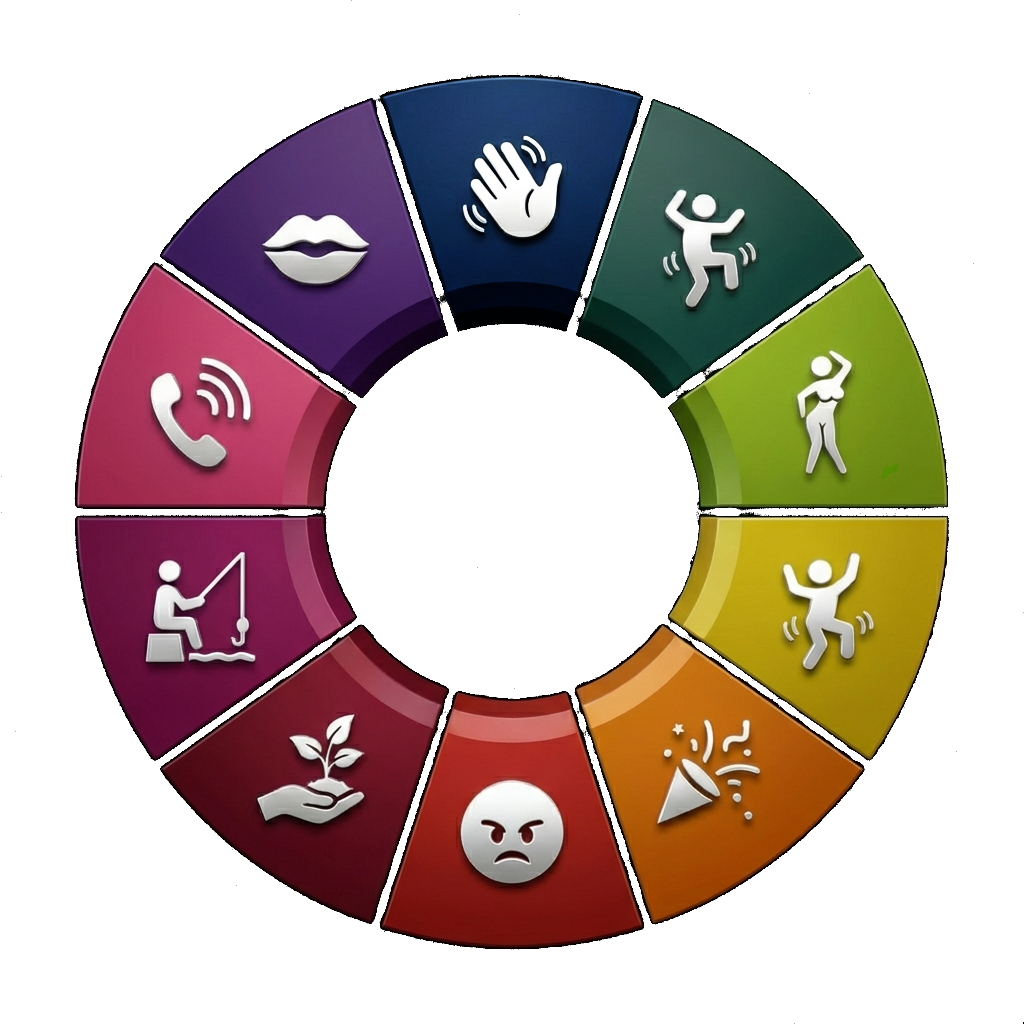
Not everything in the world is about fighting. Press Q to open the radial pie menu with 10 social emotes for non-combat interaction -- wave to a stranger, dance at a gathering, bow to an NPC, or just sit down and fish.
- Wave -- A friendly greeting.
- Dance -- Show off your moves.
- Bow -- A respectful acknowledgment.
- Sit -- Take a rest.
- Fish -- Cast a line and wait. Peaceful downtime.
- Phone -- Pull out a phone for a chat. Because even virtual worlds have cell service.
Damage Scaling Quick Reference
Every damaging ability follows the formula: Base Damage + (Attribute x Multiplier). Here is the complete table for theorycrafters.
| Ability | Key | Type | Base | Scaling | Cost | CD | Range |
|---|---|---|---|---|---|---|---|
| Basic Attack | 1 | Physical | 25 | STR x 2.0 | 5 STA | 1.0s | 3m |
| Block | 2 | Defend | -- | 50% DR | Hold | -- | Self |
| Triple Strike | 3 | Physical | 45 | STR x 3.0 | 10 STA | 2.0s | 3m |
| Spell Cast | 4 | Magical | 40 | MAG x 3.0 | 20 MP | 3.0s | 8m |
| Sword Slash | 5 | Physical | 35 | STR x 2.5 | 8 STA | 1.5s | 4m |
| Stun | 6 | Physical | 20 | STR x 1.5 + 2s stun | 15 STA | 8.0s | 4m |
| AOE Spell | 7 | Magical | 30 | MAG x 2.0 (6m AoE) | 30 MP | 10.0s | Self |
| Heal | 8 | Holy | 50 HP | FTH x 3.0 | 25 MP | 12.0s | Self |
| Ultimate | 9 | Magical | 100 | MAG x 5.0 | 50 MP | 30.0s | 6m |
| Taunt | 0 | Utility | 1 aggro | All in 8m radius | 10 STA | 15.0s | 8m AoE |
STR = Strength, MAG = Magic, FTH = Faith, STA = Stamina cost, MP = Mana cost, CD = Cooldown, DR = Damage Reduction. A 500ms global cooldown applies to all abilities on top of individual cooldowns.
Resources
Combat revolves around three resource pools. Managing them well is the difference between victory and a long walk back from the respawn point.
Health is your lifeline. When it reaches zero, you are defeated. It regenerates slowly when you leave combat, so retreating to recover is a valid strategy.
Mana powers magical abilities -- spells, heals, and area effects. It regenerates over time, but heavy spellcasting will drain it quickly.
Stamina fuels physical abilities like dodge, block, and melee combos. It recovers faster than Mana but is spent in larger bursts.
Your character's attributes determine which resource pool is primary. A character built around Magic, Faith, or Charisma will use Mana as their main resource. A character focused on Strength, Agility, or Cunning will rely on Stamina instead.
Targeting
Before you can attack, you need a target. The targeting system is designed to be straightforward so you can focus on the fight rather than fighting the interface.
- Click an enemy to select them as your target. A glowing ground ring appears beneath them so you always know who you are focused on.
- Floating nameplates appear above targeted enemies showing their name and current health, giving you a clear read on how the fight is going.
- Press Tab to cycle through nearby enemies. Useful when multiple threats are closing in and you need to switch focus quickly.
Combat Feedback
Every hit, block, and spell is accompanied by clear visual feedback so you always know what is happening in the heat of battle.
NPC Behavior
Enemies in poqpoq World are not standing around waiting to be attacked. They operate on a decision-making system that weighs multiple factors -- their own health, your distance, whether allies are nearby -- and chooses a response. The result is combat that feels less like hitting a punching bag and more like fighting something that is actually trying to win.
The key takeaway is that NPC behavior is emergent, not scripted. The system evaluates the creature's situation and produces a response that makes sense in context. A lone wolf behaves differently from a wolf in a pack. A guard protecting a doorway behaves differently from a roaming scavenger.
Combat Rewards
Resonance and Loot
Defeating enemies awards Resonance, the experience currency of poqpoq World. Resonance fuels your character progression -- accumulate enough and you advance in combat level, unlocking new abilities and improving your attributes. Enemies may also drop loot that you can equip or trade.
To keep the playing field fair, Resonance and experience gains are capped per event. There are no shortcuts -- progression rewards consistent play, not repetitive grinding of a single encounter.
Buffs, Debuffs, and Status Effects
Combat is not just about swinging a sword. A rich system of temporary effects can tip the balance of any encounter. Effects fall into 8 categories, each behaving differently in how they apply and interact.
Stacking behavior varies by effect. Some effects stack in intensity -- a boss's Enrage grows stronger with every stack. Others simply refresh their duration if reapplied -- a warrior's War Cry just resets its own timer -- and some are replaced entirely by a stronger version of the same effect. Pay attention to the feedback text to understand what is happening.
Effects You Will Encounter
Defend Block
Raises your guard. Grants 50% damage reduction but slows your movement by 30%. Active as long as you hold 2 (Block). Drop your guard to regain full mobility.
Stun
Freezes a target in place for 2 seconds. Stunned NPCs cannot attack or move, giving you a window to reposition, heal, or unleash a combo.
Party Blessing
A group buff that boosts all stats by 15% for everyone in your party. Lasts 60 seconds. A single blessing can turn the tide of a difficult boss encounter.
Boss Enrage
Watch out. As a boss loses health it gains stacking Enrage -- +15% damage and +10% attack speed per stack, building up over the course of the fight. The last phase of a boss fight is always the most dangerous.
Regeneration
A heal-over-time effect that restores 8 HP every 2 seconds. Excellent for sustaining through prolonged fights where burst healing is not available.
Poison
A damage-over-time effect dealing 5 damage every 2 seconds. Applied by venomous creatures and certain abilities. It adds up fast if you cannot cleanse it or finish the fight quickly.
Arcane Shield
A magical barrier that absorbs up to 100 damage before breaking. While the shield holds, your Health is untouched. A mage's best friend in dangerous territory.
Sprint
A 50% movement speed boost lasting 8 seconds. Useful for chasing down a fleeing enemy, escaping a bad situation, or simply covering ground faster between encounters.
War Cry
Boosts melee damage by 20% for everyone affected. Reapplying War Cry refreshes its duration rather than stacking, so keep it up rather than piling it on. A strong opener for any melee push.
The Damage Pipeline
When an attack connects, the damage does not simply subtract from your Health. It passes through a series of checks that can reduce, amplify, or negate it entirely. Understanding this pipeline helps you build a character that survives.
- Dodge check -- Your Agility gives you a chance to avoid damage entirely. If you dodge, you will see "DODGE" float up and take zero damage from that hit.
- Base damage -- The attacker's ability has a base damage value that scales with their attributes. Physical attacks scale with Strength, spells scale with Magic.
- Critical hit -- Every attack has a chance to critically strike, dealing 50% bonus damage. Critical hits display in a larger size and different color so you can distinguish them from normal hits.
- Shield absorption -- If you have an active shield effect (like Arcane Shield), it absorbs damage first before any touches your Health pool. The shield depletes by the amount absorbed.
- Damage reduction -- Your defensive buffs reduce whatever damage gets through. Block alone provides 50% damage reduction. Multiple sources of reduction can stack.
- Minimum damage -- Even the strongest defense cannot reduce damage below 1. Every hit that connects will always deal at least 1 point of damage, so no build is truly invincible.
Your Attributes in Combat
Seven Akashic attributes define your character. Every point you invest shapes how you fight -- whether you hit harder, dodge more, cast stronger spells, or simply refuse to go down.
Strength
Increases physical damage and max Stamina. The warrior's primary stat. If you want your melee attacks to hit like a truck, invest here.
Agility
Improves dodge chance, critical hit chance, and movement speed. Rewards skilled, mobile play. High-Agility characters are hard to pin down and land devastating critical strikes.
Magic
Powers spell damage, max Mana, and magical healing. The mage's foundation. A high Magic stat makes your spells significantly more potent and gives you a deeper Mana pool to work with.
Faith
Boosts healing effectiveness and divine damage. Enhances blessings and support abilities. Healers and support characters rely on Faith to keep their allies standing.
Cunning
Increases critical damage multiplier and debuff effectiveness. The assassin's edge. When your critical hits land, Cunning determines how devastating they are.
Charisma
Improves buff duration and party buff strength. Leaders and bards shine here. A high-Charisma character makes the entire group better through longer-lasting, more powerful buffs.
Resilience
Raw damage reduction and max Health. The tank stat. Characters with high Resilience are simply hard to kill, absorbing punishment that would fell less sturdy adventurers.
NPC Combat Parity
NPCs in poqpoq World use the exact same combat engine as players. This is not a simplified simulation running behind the scenes -- when a creature attacks you, its damage passes through the same pipeline yours does.
Because NPCs play by the same rules, every tactic you learn as a player works in reverse. If you know that Agility improves dodge chance, you can expect high-Agility creatures to dodge your attacks more often. If you know shields absorb damage before Health, you know to break an NPC's shield before going for the kill.